
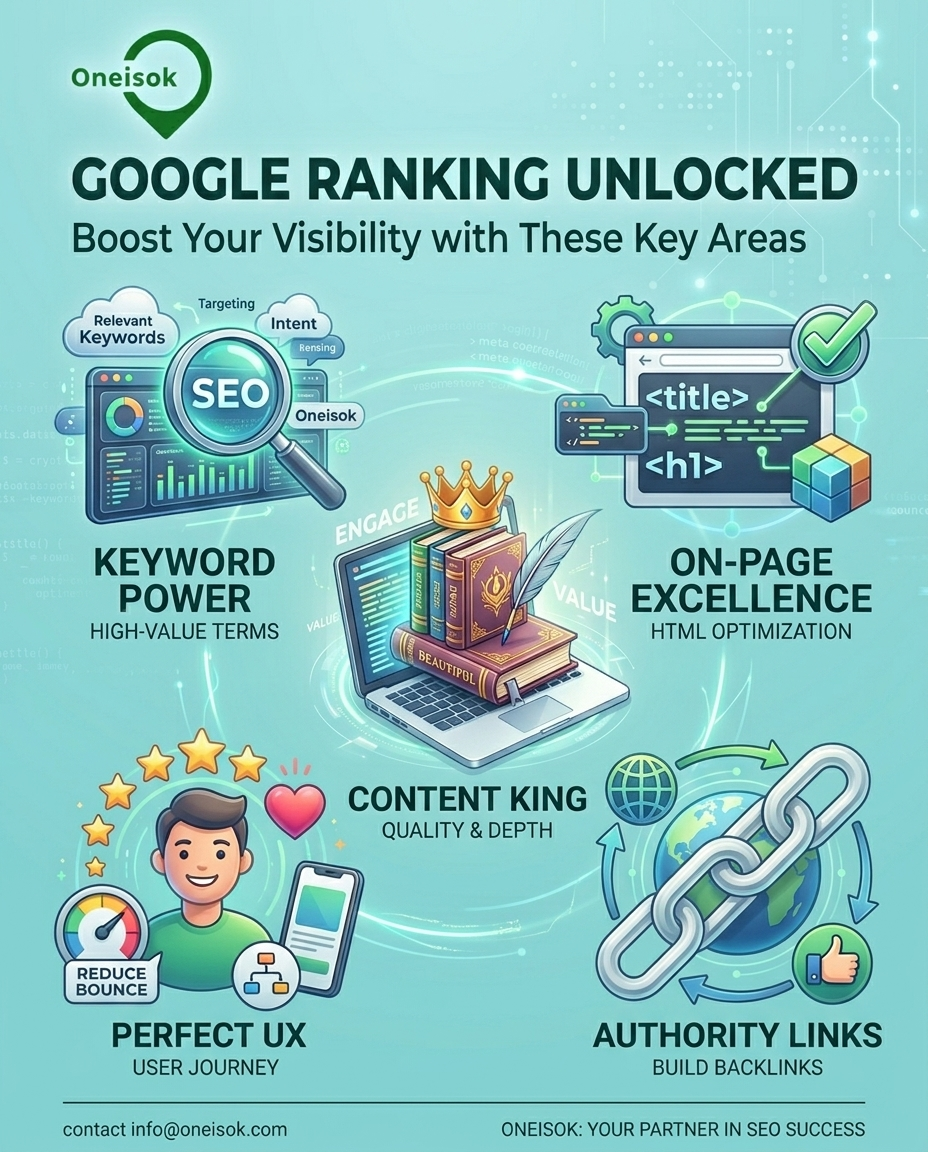
Keywords are the building blocks of search. Without understanding what your target audience is typing into Google, it's impossible to reach them. This is where "Keyword Power" comes in.
It's not just about finding any keywords; it's about finding high-value terms that have the right balance of search volume and low competition. You need to identify the words and phrases that will actually convert visitors into customers.
Go Beyond the Surface: Effective keyword research involves understanding the intent behind the search. Is the user just looking for information, or are they ready to buy? Targeting the right intent is crucial for driving quality traffic.
Think of your website's On-Page elements as its skeleton. If the structure is weak, the whole site will struggle to perform. On-Page Excellence is all about making sure Google can easily understand what your pages are about.
This includes:
Tags: The first thing Google sees and one of the most important on-page ranking factors. Your titles should be clear, concise, and include your primary keyword.
Headers: These are the main headings on your pages and should also be used to signal the topic to search engines.
Meta Descriptions: These are the short snippets that appear under your title in search results. While they aren't a direct ranking factor, they can significantly impact your click-through rate.
You've probably heard this a million times: "Content is King." But what does that actually mean in a world of AI-generated articles and endless blogs? It means creating truly high-quality and deep content that provides genuine value to your readers.
Google wants to rank content that is:
Original: Offers a new perspective or unique data.
Comprehensive: Thoroughly answers a user's question.
Engaging: Is well-written, easy to read, and keeps users on the page.
Don't just create content for the sake of creating content. Focus on becoming a trusted source of information in your niche.
Google is increasingly prioritizing user experience (UX). If a user arrives on your site and quickly clicks the "back" button (this is known as a "bounce"), it signals to Google that your page isn't helpful.
A perfect UX is about creating a seamless and enjoyable journey for your users:
Fast Loading Speed: No one wants to wait for a slow website.
Mobile-Friendliness: Most searches now happen on mobile devices.
Intuitive Navigation: Can users easily find what they are looking for?
Lower Bounce Rate: Keep users engaged and exploring your site.
Think of your user's journey from the moment they click on your link to the moment they convert. Every step should be easy and logical.
Backlinks (links from other websites to yours) are like votes of confidence for your content. The more reputable the website linking to you, the more authority Google will assign to your site. This is a critical factor in driving higher rankings.
But it's not a numbers game. You want to focus on quality over quantity:
Build Relationships: Guest posting, collaborations, and creating linkable content (like infographics or in-depth guides) are great ways to earn backlinks.
Target Relevant Sites: Links from sites in your industry are far more valuable than random, unrelated links.
Think Like an Authority: The best way to get authority links is to be an authority. Create content that other sites want to link to.
We understand that SEO can feel overwhelming. There are so many moving parts, and the landscape is constantly changing. But you don't have to navigate it alone.











 May 15, 2026 - BY Admin