
Struggling to get your website noticed on search engines? The secret to increasing your organic traffic doesn't always lie in complex off-site strategies. Most of the time, the biggest wins happen right on your own pages.
On-page SEO is the foundation of any successful digital marketing strategy. By optimizing the elements you control directly, you make it easier for search engines to understand your content and for users to enjoy it.
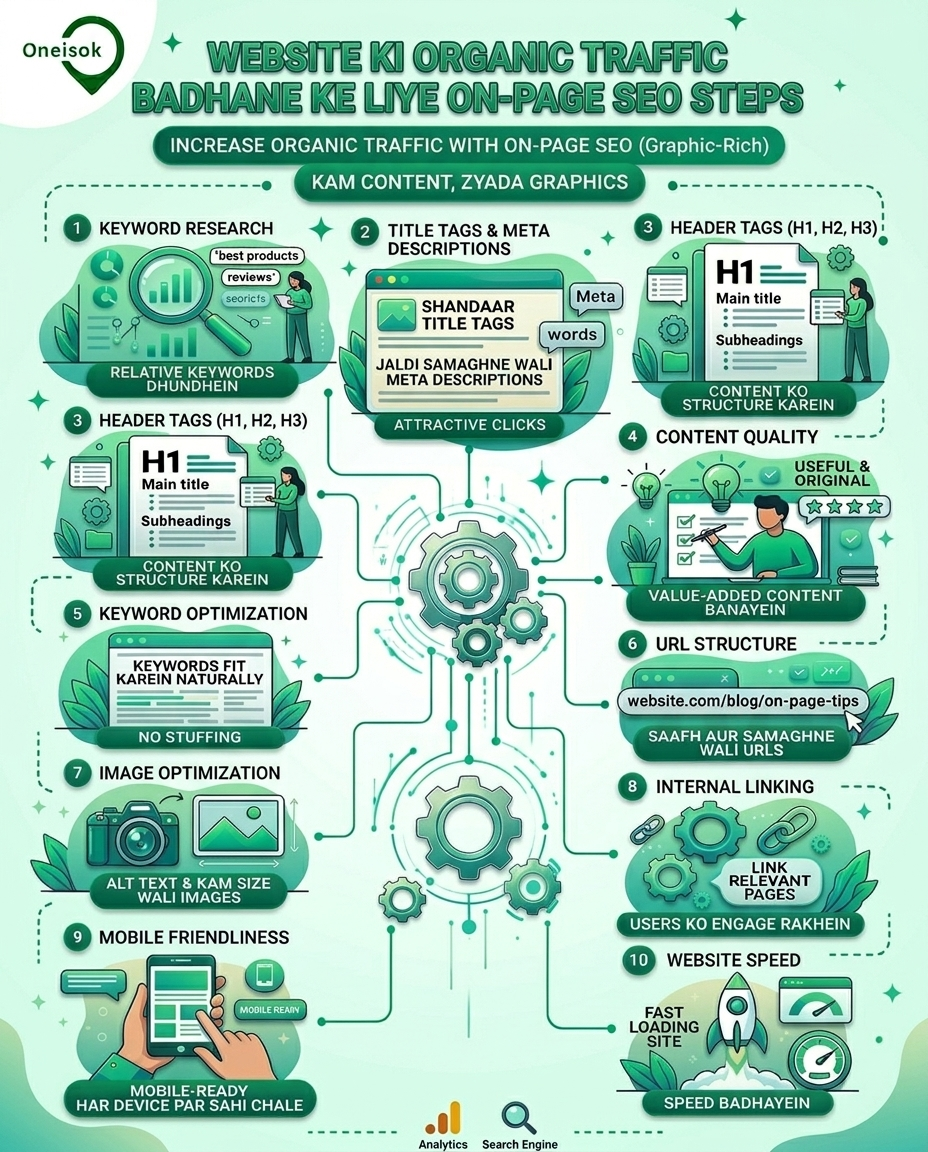
Here is our definitive 10-step guide to mastering on-page SEO and driving highly targeted, organic traffic to your site.
Before you create content, you need to know what your audience is searching for. Identifying highly relevant keywords is step one. Look for phrases that match your users' intent, whether they are looking for information or ready to make a purchase.
Your title tag and meta description are your website’s "billboard" on the search engine results page (SERP).
Title Tags: Keep them concise, compelling, and include your primary keyword.
Meta Descriptions: Write attractive summaries that explain exactly what the user will get by clicking. A strong meta description drives higher click-through rates (CTR).
Nobody likes reading a giant wall of text. Use header tags to structure your content logically:
H1: Use this only once for your main title.
H2 & H3: Use these for subheadings to break down topics into digestible, scannable sections for both readers and search engine crawlers.
Content is still king. Search engines prioritize pages that provide genuine value. Ensure your content is 100% original, deeply useful, and answers the specific questions your target audience is asking. Value-added content naturally attracts backlinks and higher rankings.
Once you have your keywords, integrate them smoothly into your content. They should fit into your sentences naturally. Avoid keyword stuffing at all costs—it hurts your readability and can lead to search engine penalties. Write for humans first, algorithms second.
Your URLs should be clean, short, and easy to understand. A good URL gives the user and the search engine a clear idea of what the page is about.
Visuals are great for user experience, but large files can slow down your site. Compress your images so they take up less space without losing quality. Additionally, always add descriptive Alt Text to your images. This helps visually impaired users understand the image and gives search engines more context about your page.
Keep users engaged by linking to other relevant pages within your own website. Internal linking helps spread link equity throughout your site, reduces bounce rates, and guides visitors down your conversion funnel.
With the majority of web traffic now coming from smartphones, a mobile-ready website is non-negotiable. Your site must adapt seamlessly to any screen size. If your site doesn't work perfectly on a mobile device, search engines will drop your rankings.
Speed matters. A slow-loading site frustrates users and leads to high bounce rates. Optimize your code, leverage browser caching, and upgrade your hosting if necessary to ensure your pages load in a flash.
Ready to dominate the search results? Implementing these on-page SEO steps takes time and consistency, but the resulting organic traffic is well worth the effort. If you need expert help optimizing your digital presence, the team at Oneisok is ready to assist.











 May 22, 2026 - BY Admin